
You’ve probably seen the phrase “It’s OK not to be OK”—on posters, in social media, on mental health company logos and in mental health campaigns. The phrase actually comes from a Korean romantic comedy, pretty far removed from mental health. No doubt the phrase is well-meaning, but I find myself asking: Is it really OK? And if so, what does “OK” actually mean?
As the leader of a Highland based mental health charity and someone who has experienced mental illness, I’ve spent a lot of time thinking about this. The phrase suggests that it’s acceptable to struggle, to feel low, to be unwell – but is it really? Mental health support shouldn’t be about slogans, it’s more serious than that. While talking can be therapeutic, it is not a cure, and if the wrong person is doing the listening it can be seriously damaging.
Mental health campaigns often encourage people to speak up, that’s important, but what happens after the conversation? Too often, people are met with long waiting lists, under-resourced services and sometimes even indifference. Not everyone is kind. Disclosure can be met with embarrassment, hostility, or avoidance, especially if the person doing the disclosure doesn’t display acceptable traits.
There’s a kind of social sympathy reserved for those who are either famous, articulate or popular and on a path to recovery. I know this because I’ve been there. I’ve been fortunate to live through the most challenging periods, but I also know that this isn’t everyone’s story. Something that I discovered was that clinical advice is often without understanding or compassion, people you considered friends abandon or avoid you and this leaves people isolated and driven down a road of medication and sometimes longer-term illness driven on a road by clinicians who don’t really care or understand and who can get frustrated with your lack of progress.
What is true is that recovery looks different for everybody and for some people recovery and wellness may never be achieved. These are the individuals who are often avoided, not because they’re dangerous, but because they’re different. People living with schizophrenia or some kinds of psychosis may experience hallucinations, delusions, or profound disconnection from reality. Some respond to treatment. Others don’t. And they live in a world that few can understand and certainly the media doesn’t help this perception.
Then there are those struggling with addiction, another issue that very often comes with mental ill health. Many reach out for help and either don’t get help or if they do still don’t get better. Some die, and even in their most vulnerable moments, they’re met with disgust or dismissal, especially if they’re still using substances. That’s precisely when they need compassion and understanding the most. Talking alone most certainly won’t help these individuals. They need something more.
Its challenging for practitioners and for loved ones – especially when service users are self-harming or behaving in ways that are difficult to understand or manage. Often these support workers also need support to come to terms with the issues they are dealing with. Within some organisations that isn’t always there. While it’s not easy it most certainly isn’t OK for anybody.
So here’s my view, not being OK is not a long term solution as people who are not OK know very well.
It should be acceptable to admit to difficulties. But that doesn’t solve them. Talking is important, but it doesn’t cure serious or even mild mental illness. Indeed it may well make things worse, especially if the person listening doesn’t come from a place of experience. We need more than awareness – we need action. We need well-funded services, timely treatment, and a society that doesn’t flinch at the sight of suffering. We also need well trained and crucially, well supported staff who are able to deal with the issues that are presented to them.
However, as a society we also need to confront our own discomfort. There’s a deep-rooted fear of what is “different.” It’s protective, perhaps, but it feeds stigma, and stigma thrives on ignorance and denial.
That’s why as a charity we are championing peer supported Discovery Colleges across Highland to provide people with more than just talking. This resource takes people on a journey of discovery where they learn about themselves how they can cope and live with their everyday challenges so that they do not overwhelm. It’s all done on the persons own terms without anyone telling them what their expectation should be. Rather they work with our peers, people who have been in very serious situations of mental illness, substance abuse or both and understand the challenges that these issues can cause so there’s empathy and understanding.
The support we offer is unique in the Highlands, and its effectiveness is backed by detailed research. No referral is needed; the service is free, non-clinical, and open to everyone. Whoever you are and whatever you’re going through, you’re welcome here and will be made to feel that way. Located in the Eastgate Centre in Inverness and in the Wellington Centre in Wick, the service is easily accessible with no threatening entrances to walk through, accessing the space feels open, simple, and non-threatening.
Many people experience mental ill-health. Some more severely than others. They don’t need slogans, they need recognition, support, and resources. They already know they’re not OK. What they need is for the rest of us to stop pretending that saying so is enough.
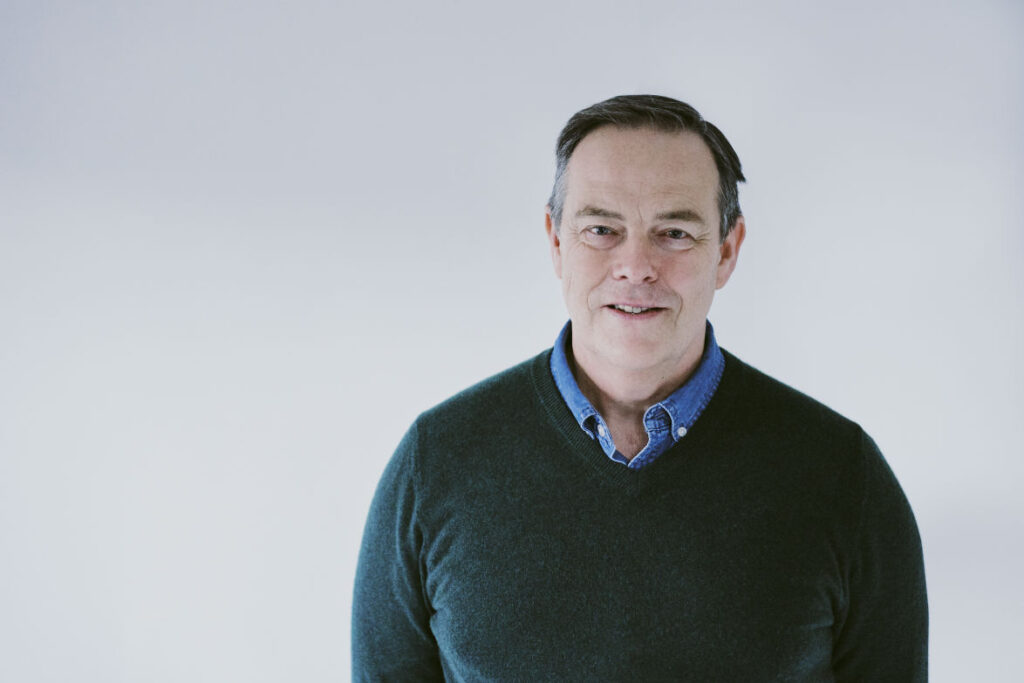
David Brookfield, CEO, Centred Scotland.
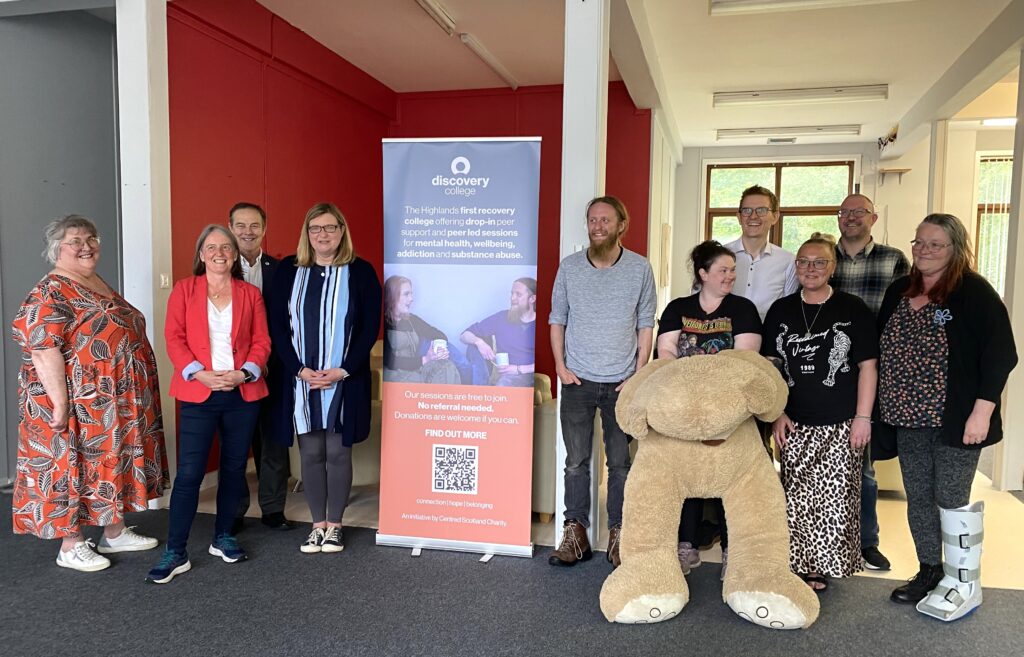

Find out more about our Discovery Colleges, perhaps it could help someone you know.